I have been watching a cooking show on Netflix, titled ” Raja Rasoi aur anya Kahaniyaan”. This show is a documentary based show that tells you a story about different cuisines across India and the history about their cuisines. It also covers how and when those cuisines where introduced and how different parts of the world have influenced it, e.g. the millet flour, that was introduced in India around 400 years ago and it is consumed in a form of flat bread in the different parts of Gujarat.
The episode I looked into the one which was concentrated on Gujarat and its cuisines, this was the last episode of the show, episode 11.
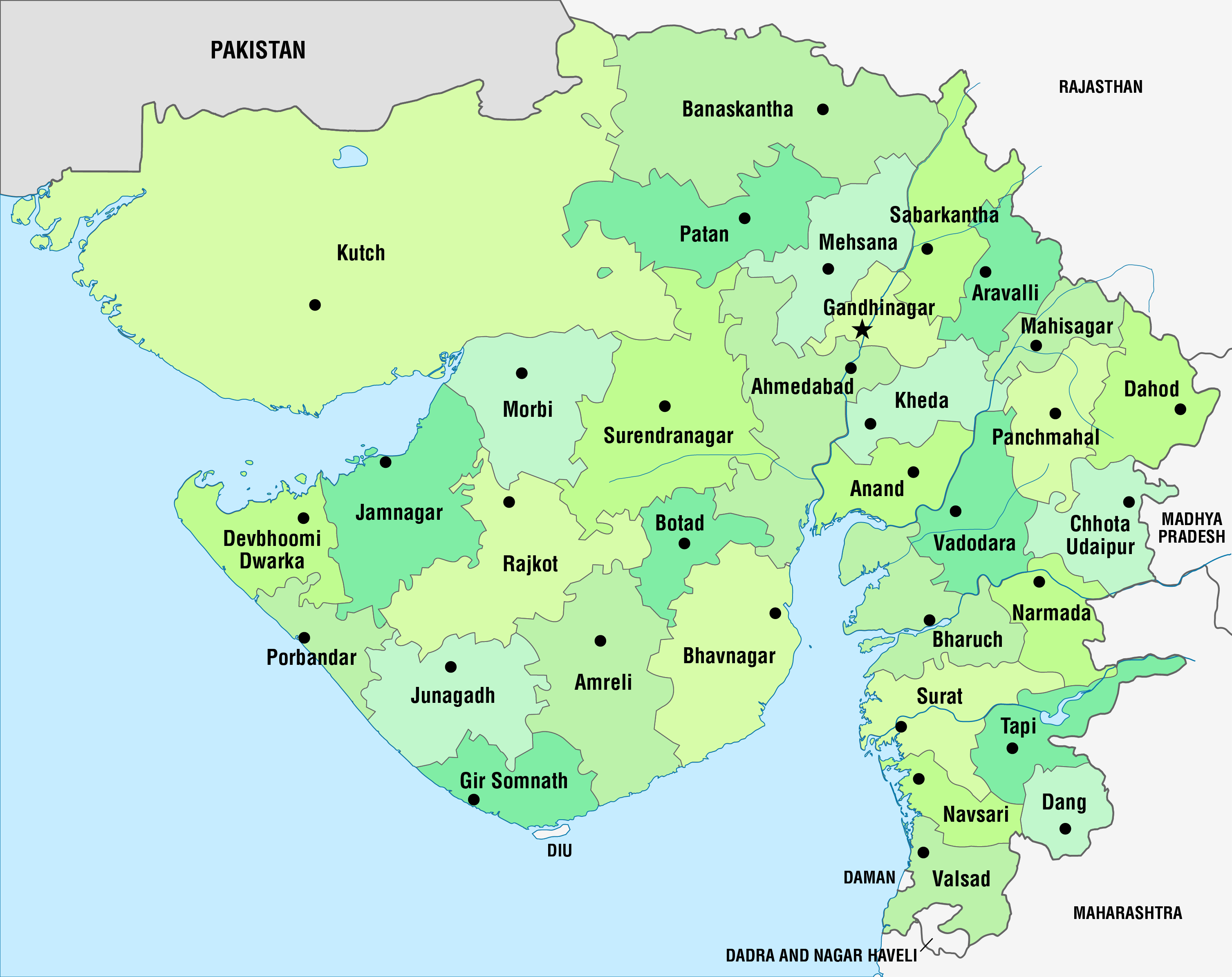
Like I have mentioned before in my game play video that Gujarat is split into 2 regions one is Sawrasht which is in the middle of Gujarat going towards the cost and the other is Gujarat which is towards Maharashtra, however there is also one more region to the state and that is Katch. Now Katch and Sawrasht have few similarities with there food except for one that in Sewrasht people use sugar in there food, and this was due to that people in the past would be doing laborious work so they needed the energy of sugar. People use to replenish that by having jagry and water, but then started to add sugar to there food to get that extra source of energy. Not to say that all the food has sugar, but few do, like the Gujarati daal and kadhi.
The show concentrated on Katch and the Gujarati ‘Thali’, which in the olden days was used as a vessel to cook rice, but then in the modern times it became a platter to serve different types of food so you can taste different flavours.
In a ‘Thali’ you would get ‘Kathor’, these are types of pulses, ‘Khichadi’, which is a mixer of rice and Thoor daal or green split moong daal that is boiled together. Then you would have something sweet like ‘Kheer’ (rice pudding), seasonal vegetables and millet flat bread.
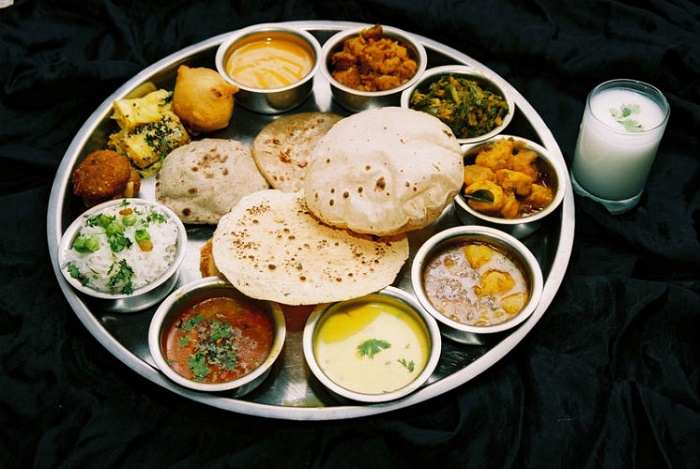
Quote Abhay Mangal Das: “If somebody were to ask the question of why there are so many items in a Gujarati ‘Thali’, why are there 25-30 items? It doesn’t mean there choices. All the items are so balanced that they compliment each other. They don’t supplement each other.”(Raja Rasoi aur anya Kahaniyaan, Release year: 2014)
This is to say that the person who is eating the food and with the different range of food that is severed on a ‘Thali’ has the full control of how much they want to mix their 2 or 3 saak that they might have with their millet flour flat bread, rice or daal. They get to conduct how they eat their food and what flavours they want to taste and merge while eating.
Quote, Abhay Mangal Das: ” It’s like different notes of a symphony. Different players in an orchestra” (Raja Rasoi aur anya Kahaniyaan Release, year: 2014
I would recomend this show for people who would like to know more about the Indian cuisine.
I believe I have spoke about how something as simple as daal changes around India, from the way its cook to its taste the same thing is for a staple snack dish ‘Dhokla’. ‘Dhokla’ is a sweet salty sponge that is steamed cooked and it looks a bit like a yellow cake. The ‘Dhokla’ is made out of gram flour and yogurt, but even somthing as simple as ‘Dhokla’ is cooked differently in different rgions of Gujarat. In Sawrasht you would get ‘Khaman Dhokla’ and Gujarat cities like Surat or Vapi they would make ‘Idada’ which is white in colour and a bit sour in taste. So you can see how cuisines in India changes vastly and it is just not your normal western “Curry”.


Khanna, R., 2014. Raja Rasoi Aur Anya Kahaniyan | Netflix. [online] Netflix.com. Available at: <https://www.netflix.com/watch/80102616?trackId=14277283&tctx=0%2C10%2C99904a54-1459-40a7-889f-a2d8e2f772e1-42692415%2C%2C> [Accessed 11 May 2020].
 Nav's Game Design